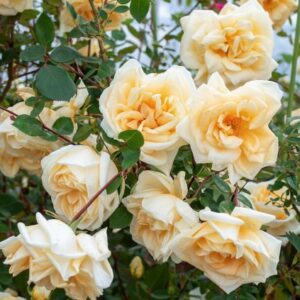

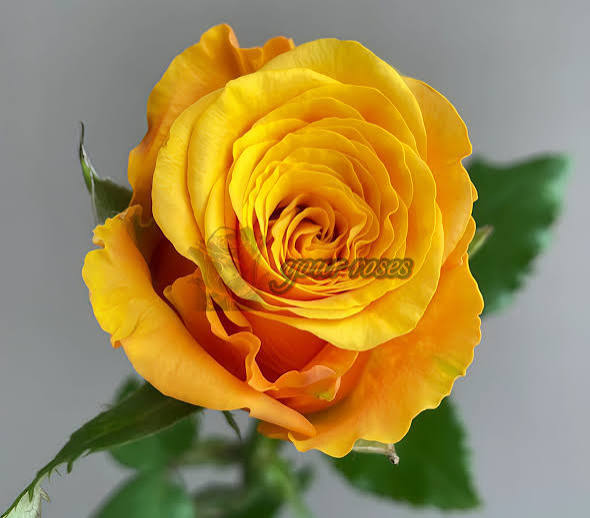
The ‘Cleopatra’ rose (botanically known as Rosa ‘Korverpea’) is a striking, bicolor Hybrid Tea rose originally bred by Kordes in Germany . While frequently sought after or referred to as a “yellow rose” due to its prominent golden features, it is celebrated for its distinctive crimson-red petals with a pale, creamy-yellow reverse . [1, 2]
Visual Description & Appearance
- The Bloom: It produces large, high-centered, fully-double flowers (typically holding 35 to 48 petals). The inner face of the petal is a rich, velvety crimson or wine-red, while the outer reverse side is a contrasting brassy, golden-yellow. The flowers average 10–13 cm (4–5 inches) in diameter. [1, 2, 3]
- Foliage & Habit: The plant forms a compact, upright, and bushy deciduous shrub growing between 0.5 to 1.5 meters tall. Its stems bear dense, glossy, dark green leaflets that highlight the bright bicolored flowers. [1, 2]
Key Characteristics
- Fragrance: It possesses a mild, subtle, and lightly fruity or classic sweet rose scent. [1, 2]
- Blooming Period: It exhibits strong repeat-flowering habits (remontant), flushing abundantly from late spring or early summer straight through into autumn. Flowers generally appear solitary on long, sturdy stems, making them excellent for cut-flower arrangements. [1, 2, 3, 4]
- Hardiness & Care: Highly valued for its excellent resistance to major rose diseases, it thrives best in full sun and fertile, moist, well-drained soil. It is a hardy variety (down to -20°C). [1, 2, 3]