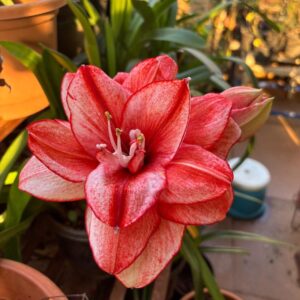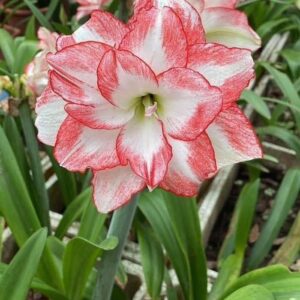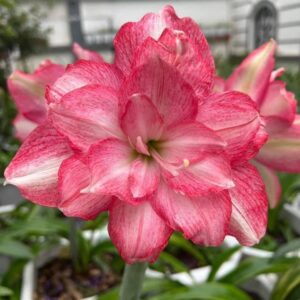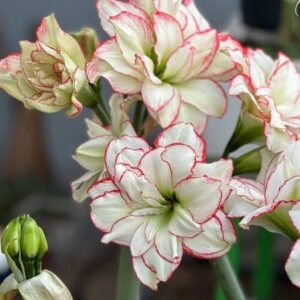

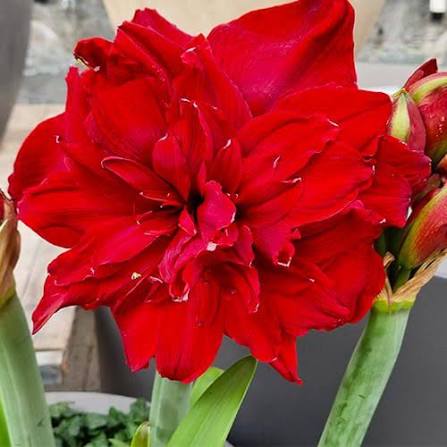
Scarlet Belle (often spelled Scarlett Belle) is a striking double-flowering Amaryllis cultivar known for its rich, opal-red petals and sweet fragrance. Unlike standard single-petal varieties, its blooms feature extra layers of petals, giving them a lush, rose-like appearance.
Key Characteristics
- Appearance: Deep red (opal-red) flowers with six primary petals plus internal layers that create a full, starburst effect.
- Bloom Details: A single sturdy stalk (peduncle) typically opens about 4 to 6 buds at its peak. Individual flowers can reach 10–15 cm in diameter.
- Fragrance: Features a delicate, sweet scent, which is relatively rare for many modern amaryllis hybrids.
- Size: Established plants reach a height of approximately 30–50 cm.
- Flowering Period: Naturally blooms in early spring (March–May), though bulbs are often “forced” for winter holiday displays.
Care and Growing Tips
As a member of the Hippeastrum genus, Scarlet Belle is considered easy to grow, making it a popular choice for indoor pots.
Amarylia +1
- Light: Requires bright, indirect sunlight. Avoid direct midday sun, which can burn the petals.
- Watering: Water sparingly until the flower stalk appears. Once growing, water every 3–4 days or when the top inch of soil feels dry.
- Planting: Use well-draining soil and a pot only slightly wider than the bulb. Leave the top third of the bulb exposed above the soil.
- Dormancy: After the flowers fade, cut the stalk but keep the leaves. In late summer, stop watering and move the bulb to a cool, dark place for 8–10 weeks to trigger the next bloom cycle.
Note: All parts of the plant are toxic to humans and pets if ingested and can be a skin/eye irritant.