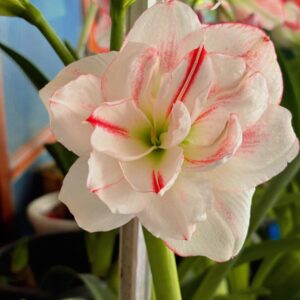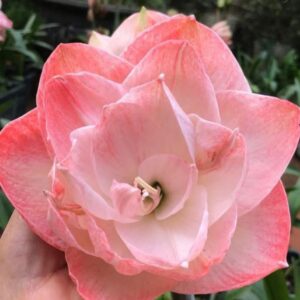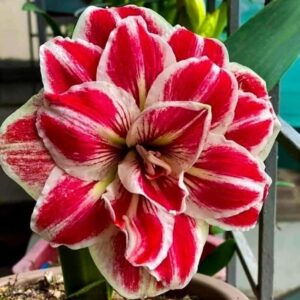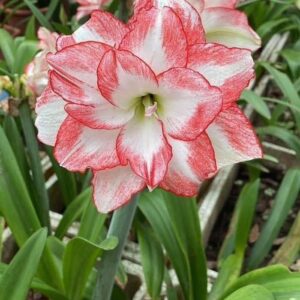

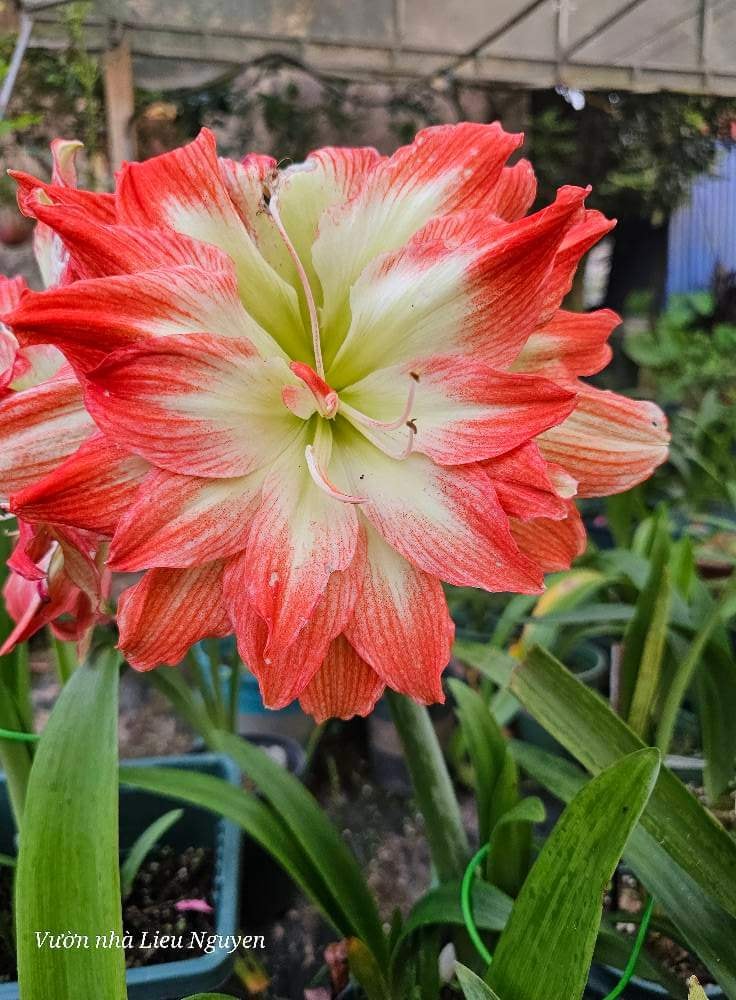
The ‘Oriane‘ amaryllis is a specific, popular cultivar of the Hippeastrum genus, often sold as a high-quality, large-flowered, deep red/velvety crimson, or sometimes white-edged, amaryllis bulb. They are prized for their dramatic, large, trumpet-shaped blooms and ease of cultivation, particularly as indoor holiday plants.
Here is a guide to the Oriane Amaryllis bulb in English:
Characteristics of Oriane Amaryllis
- Color: Typically a deep, velvety red or rich scarlet. Many hybrids, including popular red varieties, often feature a distinctively dark green, yellow, or cream throat.
- Bloom Size & Number: A high-quality bulb typically measures 30–32 cm or larger in circumference, producing 1–2 stems, each bearing 3–5 large, wide-open, trumpet-shaped blooms.
- Growth Cycle: They bloom about 6–10 weeks after planting.
- Uses: Ideal for indoor container gardening, holiday decoration, and long-lasting cut flower arrangements.
Planting and Care Guide
- Planting Time: For Christmas/holiday blooms, plant in early to mid-November.
- Potting: Select a pot just 1–2 inches wider than the bulb, as they prefer to be slightly root-bound. Ensure it has drainage holes.
- Soil & Planting Depth: Use a well-draining, high-quality potting mix. Plant the bulb with the top one-third to one-half of the bulb exposed above the soil line.
- Light: Place in bright, indirect light.
- Watering: Water sparingly initially. Once growth appears, water whenever the top 1-2 inches of soil feel dry. Avoid getting water on the neck of the bulb to prevent rot.
- Temperature: Thrives in 60-75°F (15-24°C).
Post-Bloom Care (How to Rebloom)
- Cut the Stem: Once blooms fade, cut the flower stalk about 1-2 inches above the bulb. Keep the green leaves attached.
- Summer Growth: Move the pot to a sunny spot or outdoors (after frost) to allow leaves to photosynthesize and feed the bulb for next year.
- Dormancy (August-October): In late summer, stop watering and fertilizing to let the leaves turn yellow and die back.
- Rest Period: Store the bulb in a cool (50-60°F), dark, dry place for 8–10 weeks.
- Restart: After the rest period, repot or top-dress with new soil, bring to a bright spot, and start watering.
Important Tips
- Toxicity: All parts of the amaryllis are toxic to humans and pets if ingested.
- Red Blotch: Watch for a fungus that causes red streaks on leaves and stems; it can be treated with a fungicide.
- Support: As the stems are heavy, you may need to stake them.