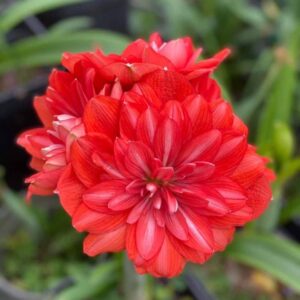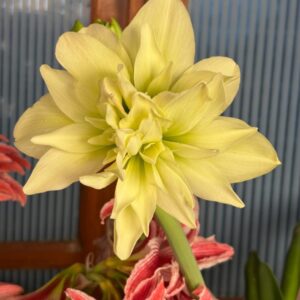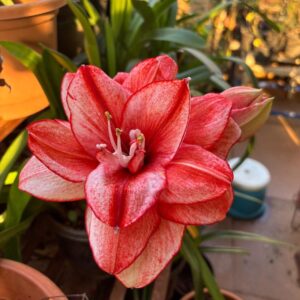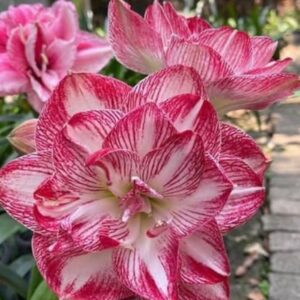

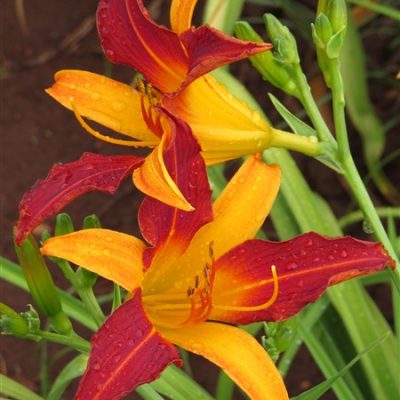
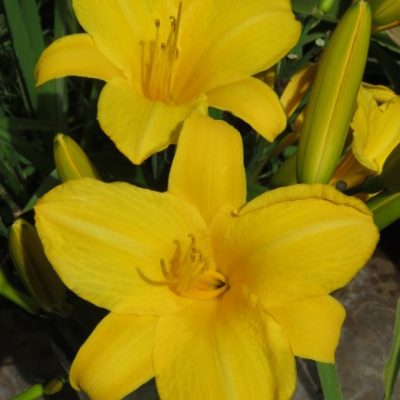
The Frans Hals daylily (Hemerocallis ‘Frans Hals’) is a historic, reliable perennial famous for its striking bicolored flowers, featuring alternating petals of deep rusty-orange and golden-yellow with creamy midribs. Named after the Dutch painter, it is a low-maintenance, drought-tolerant plant that thrives in almost any soil. [1, 2, 3]
Key Plant Features
- Bloom Color: Vibrant two-tone orange and yellow petals, often creating a “sunburst” effect.
- Bloom Time: Mid to late summer (typically July to August), with potential for a lighter rebloom in the fall.
- Plant Size: Grows to about 60–80 cm (24–30 inches) tall and spreads 45–60 cm (18–24 inches) wide.
- Growth Type: Dormant diploid. [1, 2, 3, 4]
Growing Requirements
- Light: Full sun to partial shade (full sun yields the most abundant blooms).
- Soil: Average, well-draining soil; highly adaptable to various types, including heavy clay once established.
- Water: Regular watering is needed for the first 4–6 weeks, but it becomes highly drought-tolerant and heat-resistant thereafter.
- Hardiness: Thrives in USDA Zones 3–9, making it incredibly cold-hardy. [1, 2, 3, 4, 5]
Care & Maintenance
- Pruning: Cut back old flower stalks after blooming to improve appearance, and trim foliage in late fall for winter preparation.
- Usage: Ideal for mass plantings, borders, containers, or erosion control on slopes.
- Wildlife: Actively attracts pollinators like butterflies and hummingbirds.
- Toxicity: Keep away from cats, as daylilies are toxic to them. [1, 2, 3, 4, 5, 6]