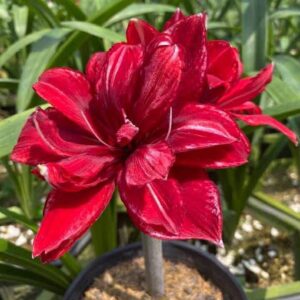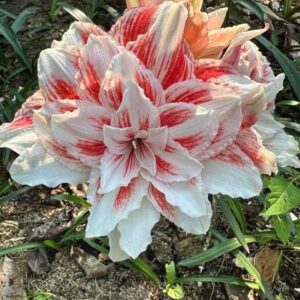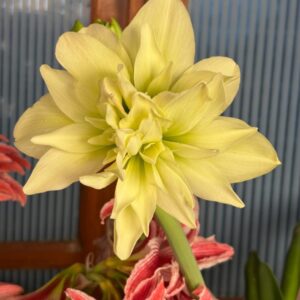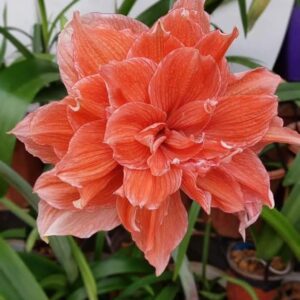

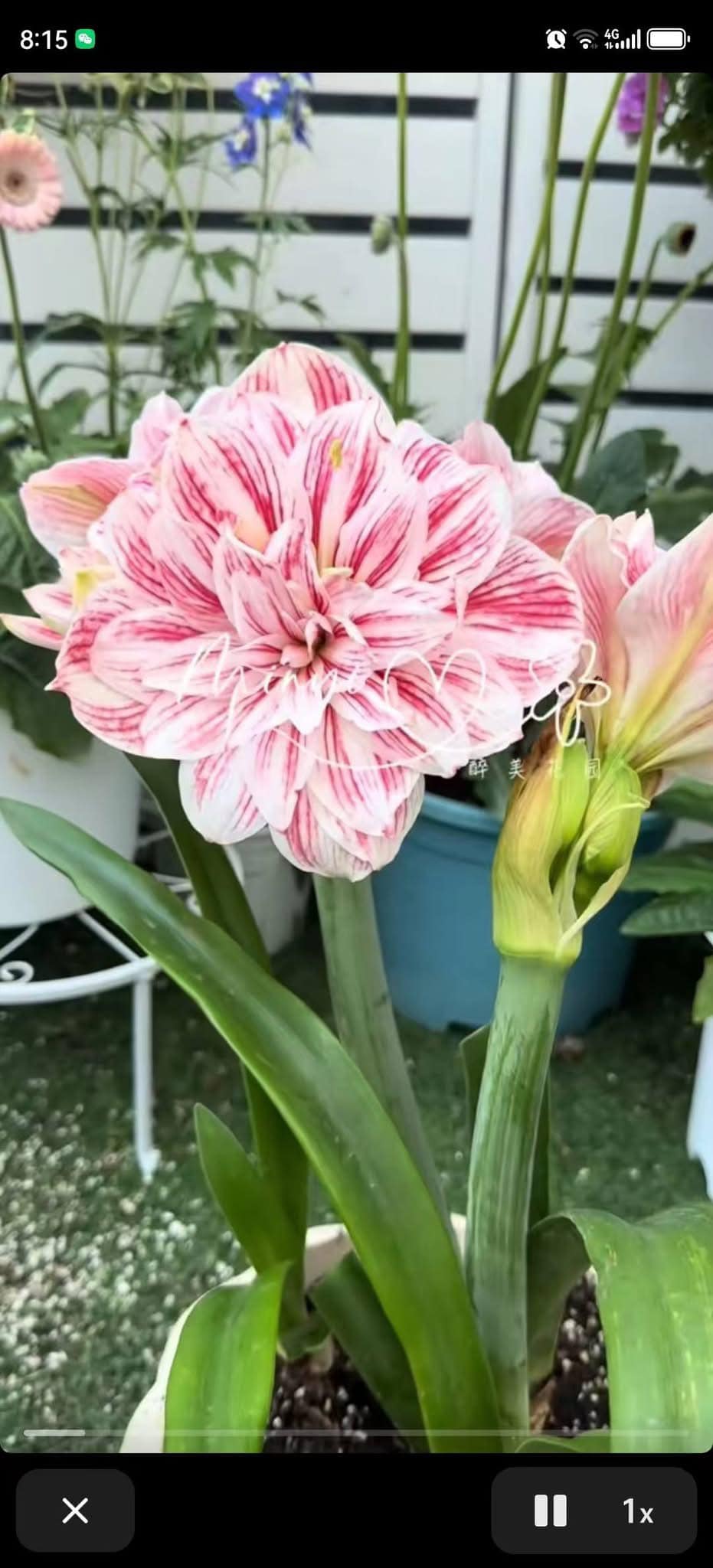
The ‘First Sight‘ Amaryllis is a specific, popular cultivar of the Hippeastrum genus, renowned for its large, elegant, and early-blooming white flowers that often feature subtle green or lime-green throats. Like other amaryllis, it is commonly sold as a large, holiday-season, indoor bulb that requires very little care to bloom, making it an excellent choice for a “first” gardening project.
Key Characteristics and Description
- Appearance: Produces large, trumpet-shaped white flowers, often with a hint of green in the center.
- Bloom Time: Known for being an early bloomer, often used to bring color into the home in late December or January, approximately 7–10 weeks after planting.
- Stalks: One bulb can produce 1 to 3, or more, strong, hollow stems (scapes), typically bearing 3-5 flowers per stem.
- Size: The bulbs are usually sold by circumference, with larger bulbs (e.g., 30-32+ cm) producing more, larger blooms.
Planting and Care Instructions
- Soil and Potting: Plant in a pot only 1–2 inches wider than the bulb, using well-draining potting mix. Leave the top 1/3 to 1/2 of the bulb exposed above the soil level.
- Watering: Water thoroughly after planting, then water sparingly until the sprout appears, as overwatering can cause the bulb to rot. As leaves and flowers develop, keep the soil lightly moist.
- Light and Temperature: Place in a warm spot (68-70°F) with bright, indirect light. Rotate the pot regularly to keep the stems straight.
- After-Bloom Care: Cut the faded flower stalks, but keep the foliage, which is essential for nourishing the bulb for next year.
Reblooming and Dormancy
- Summer Care: Move the bulb outdoors in spring after the danger of frost, or keep it in a bright spot, watering and fertilizing regularly until autumn.
- Dormancy: To make it rebloom, stop watering in late summer/early fall, allow the leaves to turn brown, and store the bulb in a cool (50-55°F), dark place for 8-10 weeks.
Note on Toxicity: Like all amaryllis, this plant is considered toxic to cats and dogs if ingested.