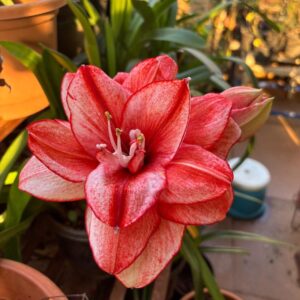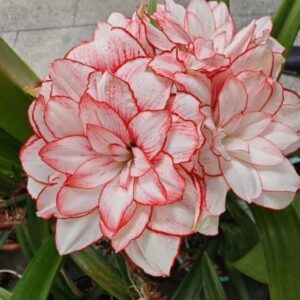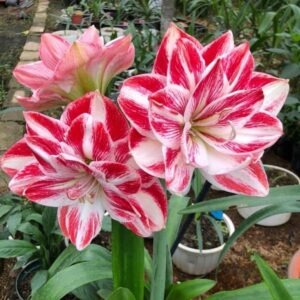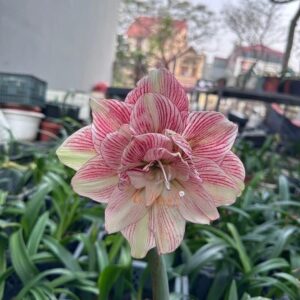
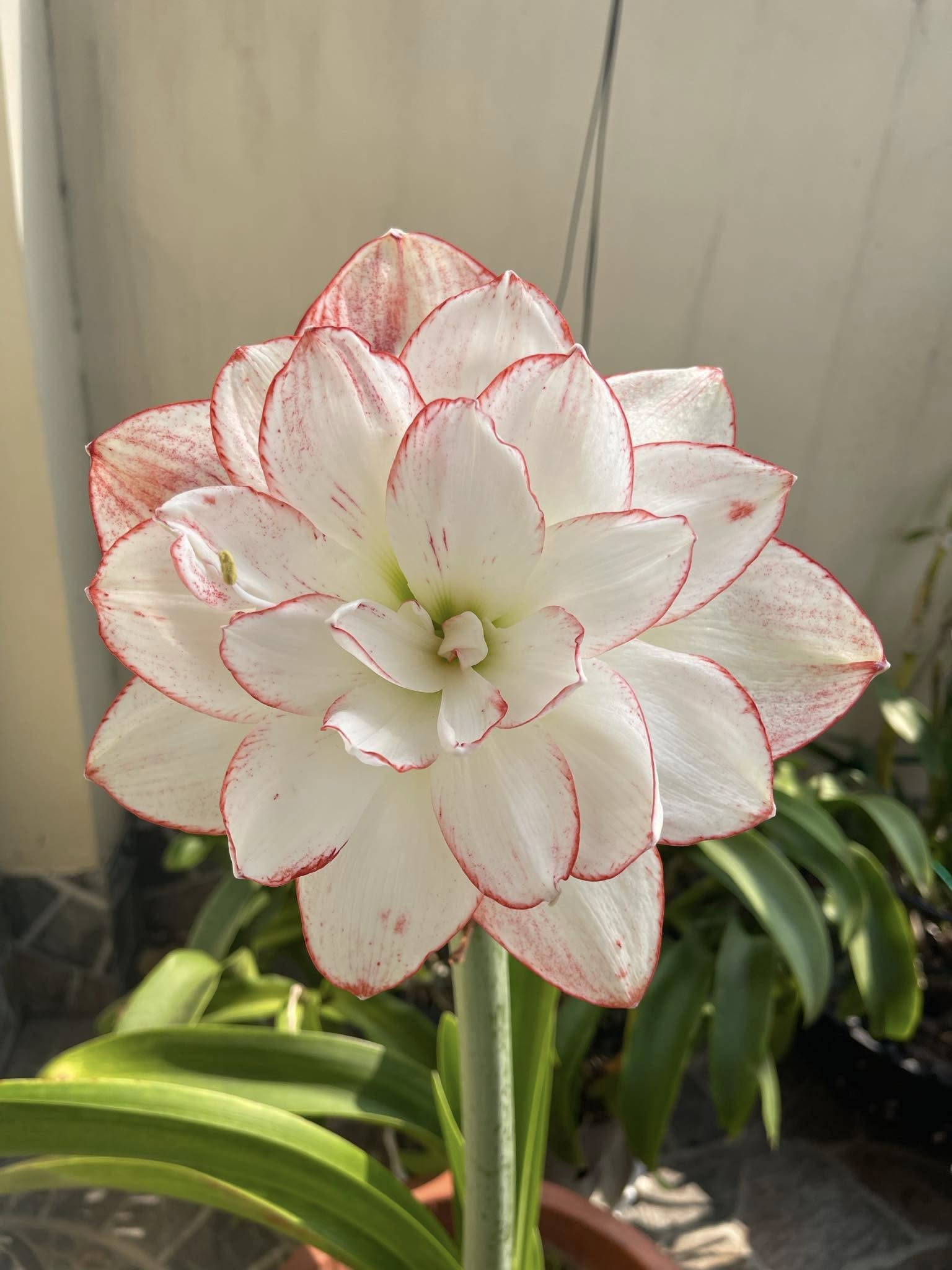
The “Exclusive Butterfly Amaryllis” typically refers to Hippeastrum papilio, a rare and exquisite species of Amaryllis native to the tropical forests of Brazil. It is highly prized for its unique, orchid-like flowers that resemble the wings of a swallowtail butterfly, featuring creamy-white and green petals with striking maroon or crimson markings.
Here is a detailed guide to the Butterfly Amaryllis bulb:
1. Appearance and Characteristics
- Flowers: The blooms are distinct from typical trumpet-shaped amaryllis, with tapering, greenish-white petals veined with deep red or burgundy.
- Size: The bulbs are usually large (often 24-26 cm or 30-32 cm in circumference) and produce sturdy stems growing 40–60 cm tall.
- Foliage: Produces long, narrow, evergreen strap-like leaves.
- Fragrance: Unlike many hybrids, it has a subtle, earthy scent.
- Blooming Period: Typically flowers in winter to spring.
2. Planting and Cultivation
- Soil: Use a well-draining, nutrient-rich potting mix (e.g., potting soil mixed with sand or perlite).
- Planting Depth: Plant the bulb with the top third to half of the bulb exposed above the soil line.
- Lighting: Prefers bright, indirect sunlight, though it can tolerate partial shade.
- Watering: Water sparingly until the first sprout appears, then water regularly, allowing the surface of the soil to dry between waterings.
- Pot Size: They prefer being slightly “pot-bound,” so choose a container only slightly larger than the diameter of the bulb.
3. Special Care and Tips
- Rare Perennial: Unlike many commercial amaryllis that are treated as annuals, Hippeastrum papilio is a true, long-lived perennial that often does not require a strict, dry dormant period, though resting it for 6–8 weeks in fall encourages better blooming.
- Aftercare: After flowering, remove the spent flower stalk, but keep the foliage to nourish the bulb.
- Repotting: Divide or repot every few years.
- Toxicity: Like all Amaryllidaceae, the bulbs are poisonous if ingested, especially to pets (dogs, cats, horses).
4. Why it is “Exclusive”
- Endangered Status: It is considered endangered in its natural habitat in Brazil, making it a rare and precious plant in cultivation.
- Exotic Look: Its unique, delicate, and sophisticated, orchid-like appearance is considered far more exotic than standard red or white amaryllis.
- Long-Term Investment: With proper care, these bulbs can grow larger and produce more blooms every year.