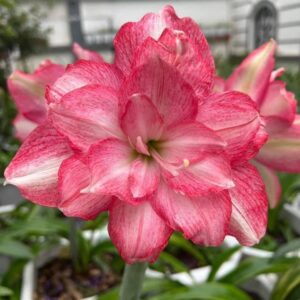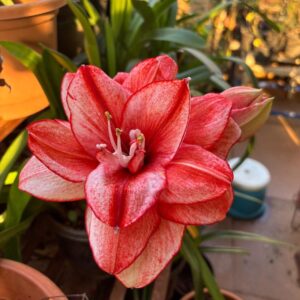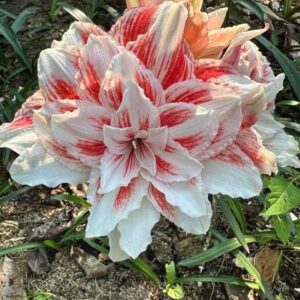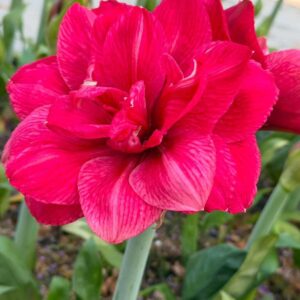

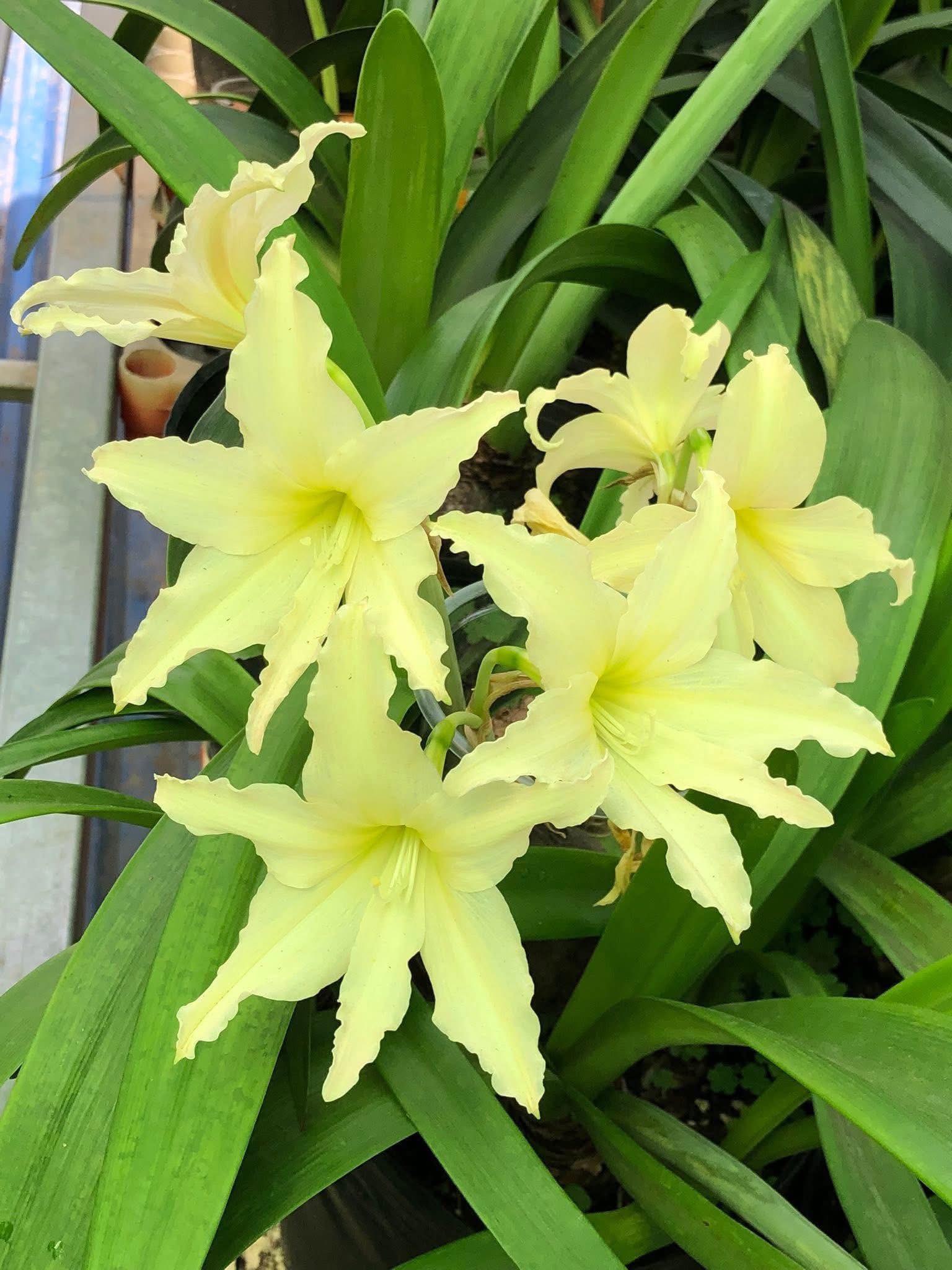
Hippeastrum evansiae (often called Evan’s Yellow Amaryllis) is a rare, small species of bulbous perennial native to the dry, hot, rocky forests and slopes of Bolivia. Unlike common, large-flowered amaryllis hybrids, this species is prized for its delicate, smaller size, trumpet-shaped, creamy-yellow to greenish-yellow flowers.
Here is a detailed guide to Hippeastrum evansiae and its care:
Characteristics
- Flowers: Trumpet-shaped, pale yellow to greenish-white, usually measuring about 3 inches long. The three upper petals are typically larger than the lower three.
- Size: One of the smallest Hippeastrum species, making it ideal for smaller pots or windowsills.
- Foliage: Produces narrow, strap-like green leaves.
- Habitat: Native to Bolivia, requiring a warm and dry winter dormancy period.
Care Instructions
- Planting: Plant the bulb in a well-drained pot, leaving the top half of the bulb exposed above the soil surface.
- Light: Prefers bright, indirect light.
- Watering: Water sparingly after planting until growth begins. During active growth, keep the soil barely moist but not waterlogged to prevent rot.
- Dormancy: This species is deciduous and requires a dormant period. In the winter, reduce watering and keep the bulb in a cool, dry, and dark place for 8–12 weeks to initiate blooming.
- Soil: Requires a well-draining, loose potting substrate.
Blooming
- H. evansiae blooms in the spring or summer, though potted bulbs may be forced to bloom earlier.
- It typically produces two to four flowers per scape.
Status
Because its natural habitat in Bolivia is being increasingly used for agriculture, Hippeastrum evansiae is considered quite rare. It is highly sought after by collectors of exotic amaryllis species.
Note: Like all Hippeastrum species, the bulb is considered toxic to pets and humans if ingested.