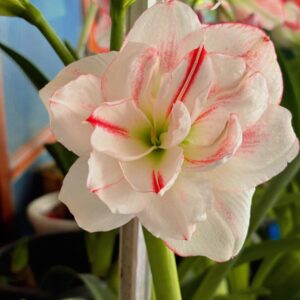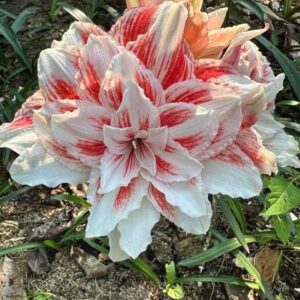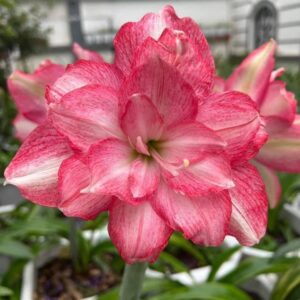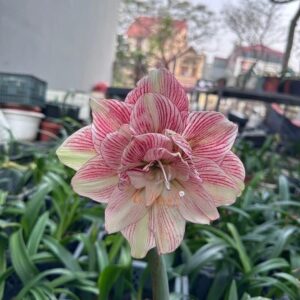

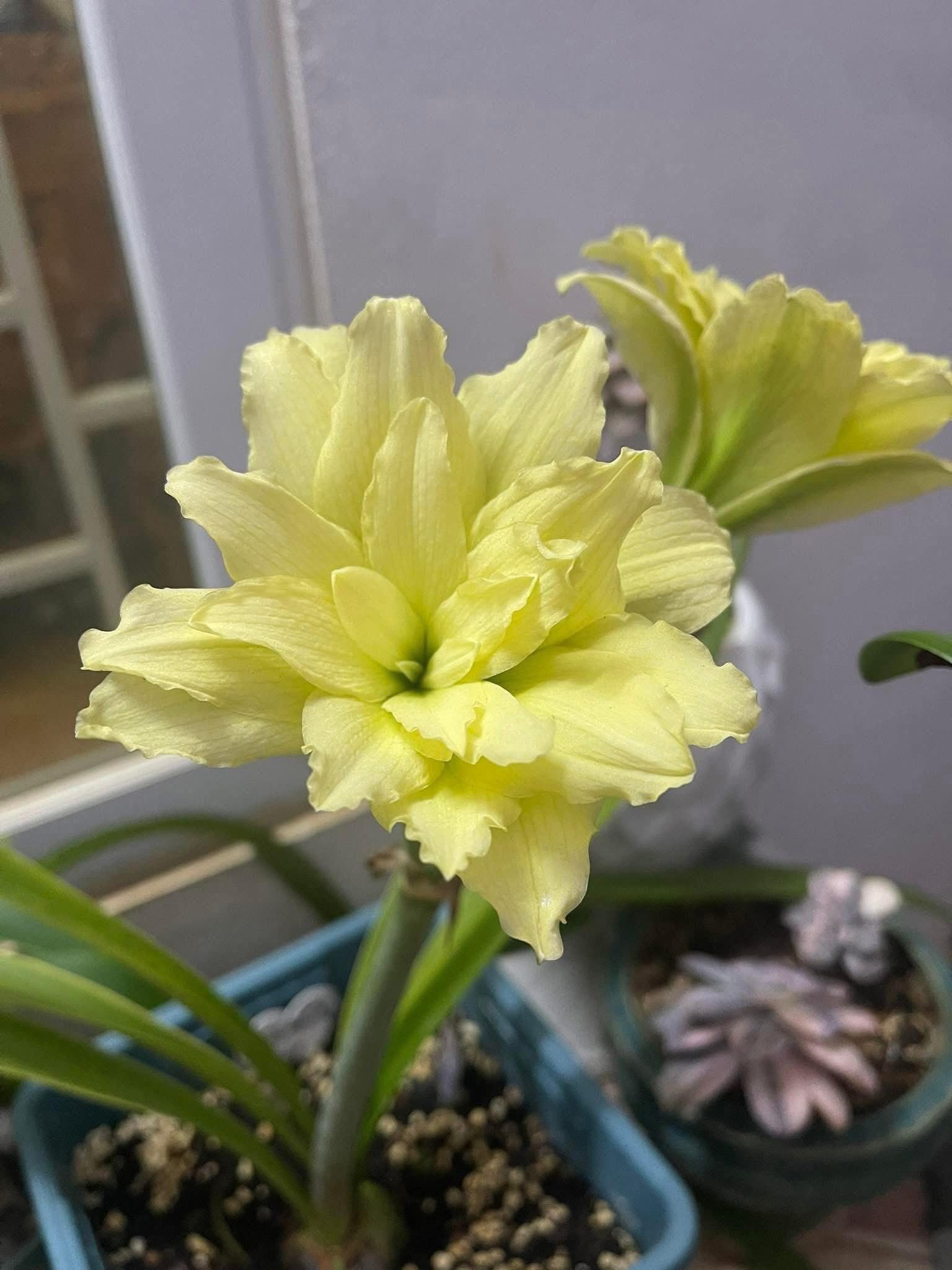
Double Moon Amaryllis (likely a variant within the Hippeastrum genus, often imported from Holland) is a premium, large-flowering, double-petaled bulb known for its dense, multi-layered, and often ruffled blooms that create a “flower within a flower” effect. These bulbs are popular for indoor, holiday-season blooming due to their ability to produce massive, showy flowers, sometimes measuring 8–10 inches across on 18–30 inch stalks.
Key Aspects of Double Moon Amaryllis Bulbs:
- Appearance: They produce large, lush, peony-shaped, or water-lily-like blooms with numerous layers of petals (tepals), usually in shades of white, pink, or red, sometimes with contrasting stripes.
- Size: The bulbs are typically large (26–28 cm or larger) and produce multiple stalks.
- Blooming Cycle: They generally bloom 6–10 weeks after planting, often during the winter holidays.
- Growth Habit: Each bulb typically produces 2–3 stems, with 3–6 flowers per stem.
- Care Requirements:
- Planting: Plant in a pot only slightly larger than the bulb, with the top third of the bulb exposed above the soil.
- Light: They require bright, indirect light.
- Watering: Water sparingly until the sprout appears, then increase to moderate watering (when the topsoil is dry).
- Temperature: They prefer temperatures between 18°C to 24°C (65°F to 75°F).
- Maintenance: After blooming, remove the dead flowers, but keep the foliage, allowing it to grow to feed the bulb for next year.
- Toxicity: Like all amaryllis, they are toxic to pets (cats and dogs).
They are considered easy to grow, making them ideal for beginners looking to add a dramatic, elegant look to their indoor spaces.