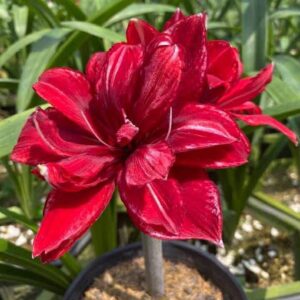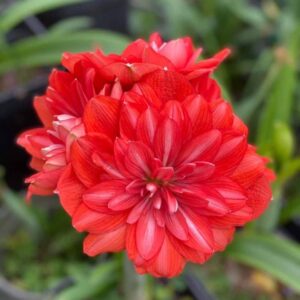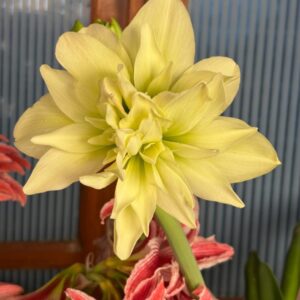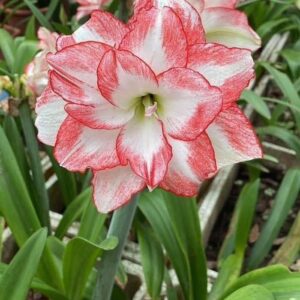

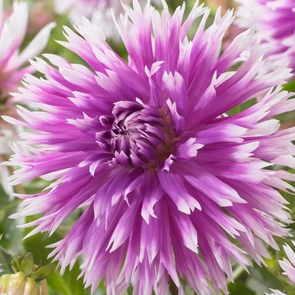
Semi-Cactus and Fimbriated (laciniated) dahlias feature uniquely textured, deeply notched or split petals that give the large blooms a fringed, spiky appearance. Unlike standard Cactus dahlias, Semi-Cactus petals are flat at the base and rolled for only half their length, combining volume with intricate, feathery edges. [1, 2, 3, 4]
Key Characteristics
- Petal Formation: The defining trait of fimbriated dahlias is that the ray florets (petals) evenly split into two or more divisions at the tips, creating a splayed or serrated fringed look. [1, 2]
- Semi-Cactus Structure: The petals radiate outward and are less strictly rolled than true Cactus dahlias, resulting in a more open, fluffy, and voluminous flower. [1]
- Bloom Size: These are often “Dinnerplate” or giant-flowering types, typically boasting large, vibrant blooms measuring between 5 to 10 inches across. [1, 2, 3, 4]
Popular Varieties
- Myrtle’s Folly: A widely celebrated semi-cactus, fimbriated variety with twisted, feathered petals in stunning, bi-colored blends of peach, pink, and yellow.
- Frigoulet: A dramatic bi-colored variety featuring red petals with white tips that look almost spiky.
- Pinelands Princess: Known for large, soft pink blooms with intricately serrated petal tips. [1, 2, 3, 4, 5]
Growing & Care Tips
- Sun & Soil: Dahlias thrive in full sun (at least 6 hours of direct sunlight) and rich, highly fertile, well-draining soil. [1, 2]
- Staking: Because fimbriated semi-cactus varieties produce massive blossoms, the plants get heavy and require staking early in the growing season. [1, 2, 3, 4]
- Water & Feeding: They are heavy feeders and require consistent watering—ensure the soil stays moist but not soggy. Avoid overhead watering to prevent powdery mildew. [1, 2, 3]
- Deadheading: Regular deadheading (removing spent blooms) will promote continuous flowering from mid-summer through autumn. [1, 2, 3]