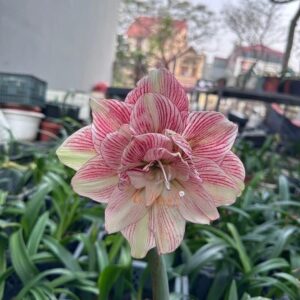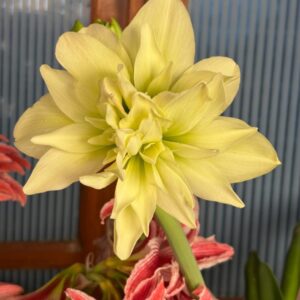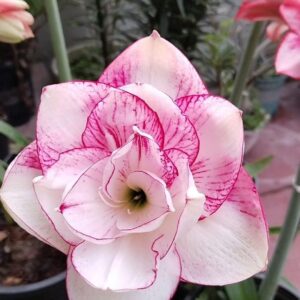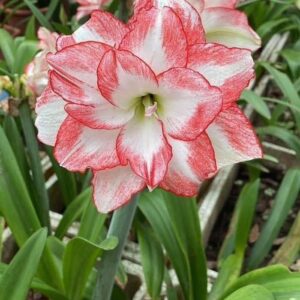

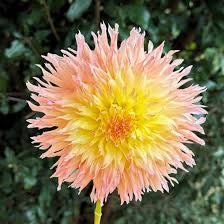
Laciniated Dahlias (also called fimbriated dahlias) are a unique classification of summer-blooming perennials prized for their dramatic, fringed look. Instead of traditional smooth edges, the petal tips split lengthwise into multiple points. This produces a shaggy, textured bloom reminiscent of a carnation or pinking shears. [1, 2, 3, 4, 5]
Unique Features
- Fringed Florets: Petals twist or roll tightly, splitting uniformly at the tips to maximize texture and movement.
- Massive Variety: Sizes span from 4-inch “Mignon” varieties up to gigantic 10-inch “Dinnerplate” giants.
- Vulnerable Blooms: The delicate, shredded petal tips hold more rainwater, making them slightly more prone to snapping or weather damage than ball types. [1, 2, 3, 4, 5, 6, 7]
Popular Varieties
- ‘Omega’: A massive 8-to-10-inch dinnerplate dahlia blending smoky tones of peach, apricot, rose, and honey.
- ‘Show ‘N’ Tell’: Striking 10-inch blossoms featuring bright red petals heavily tipped in contrasting golden yellow.
- ‘Kogane Fubuki’: Delicate 4-to-5-inch blooms displaying a vibrant pinkish-orange gradient transitioning to a soft yellow core. [1, 2, 3, 4, 5]
Planting and Soil Setup
- Timing: Plant outdoors in spring only after all frost risk passes and soil temperatures hit 15°C (60°F).
- Sunlight: Choose a sheltered location receiving 6 to 8 hours of direct, daily sun.
- Soil Requirements: Mix organic compost into rich, loose, highly well-draining soil with a pH between 6.0 and 7.5.
- Depth & Spacing: Dig a hole 4 to 6 inches deep. Lay the tuber horizontally with the small “eye” (sprout) facing upward. Space separate plants 18 to 24 inches apart. [1, 2, 3, 4, 5, 6]