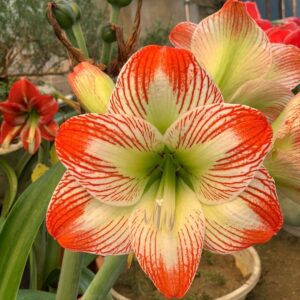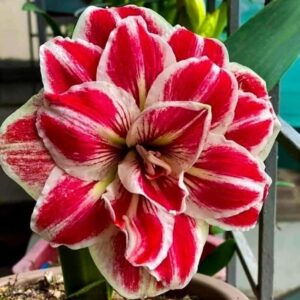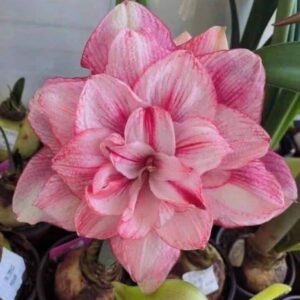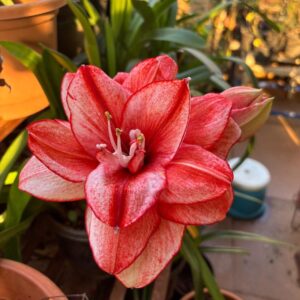

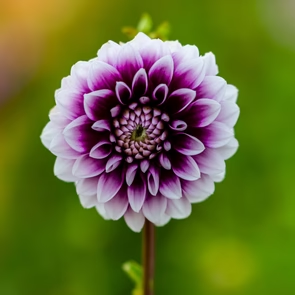
The Dahlia ‘Edinburgh’ (sometimes categorized or sold in bulb collections like Eclat) is a highly popular, classic decorative dahlia variety known for its striking, velvety deep purple blooms tipped with crisp white. It produces fully double, bi-color flowers that offer dramatic contrast in borders and cut floral arrangements. [1, 2, 3, 4]
Key Plant Characteristics
- Flower Type: Formal decorative dahlia, fully double blooms.
- Color: Rich, deep purple with delicate, contrasting white tips.
- Bloom Size: Flowers typically grow 10–15 cm (4–6 inches) wide.
- Mature Height: Grows to a bushy, upright height of 90–150 cm (3–5 feet) depending on growing conditions.
- Bloom Time: Mid-summer through the first frosts. [1, 2, 3, 4, 5]
Care & Cultivation Tips
- Sunlight: Prefers a bright, sunny, and sheltered location. Full sun ensures the most vibrant blooms, though it tolerates partial shade during the harsh midday heat. [1, 2, 3, 4]
- Soil: Thrives in fertile, humus-rich, and well-draining soil. If your soil contains heavy clay, amend it with sand or compost to improve drainage and prevent the tuberous root from rotting. [1, 2, 3, 4]
- Planting (Spring): Plant your tubers after the risk of late spring frost has passed. Dig a hole about 8–10 cm (3–4 inches) deep, lay the tuber flat or with the “eye” (growing point) facing upward, and cover it completely with soil. Space tubers about 30–50 cm apart. [1, 2, 3, 4, 5]
- Maintenance: Deadhead spent flowers regularly to encourage continuous blooming throughout the season. Taller plants may require staking with bamboo canes to support heavy blooms. [1, 2, 3, 4]
- Winter Storage: Dahlias are not frost-hardy. In regions with freezing winters, you should dig up and store your tubers in a cool, dry, dark, and frost-free place during the dormant winter months. [1, 2, 3]