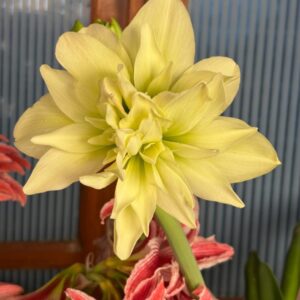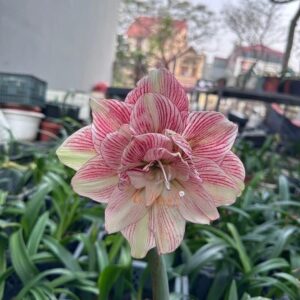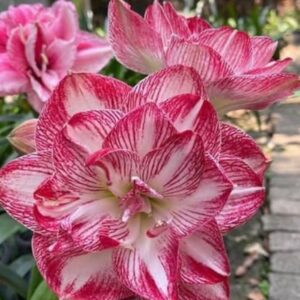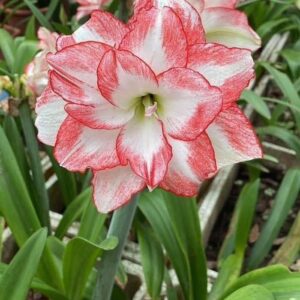

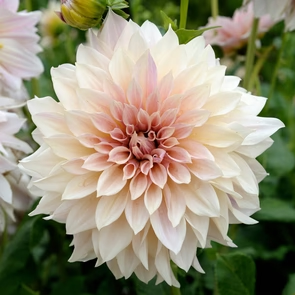

The Dahlia ‘Cafe au Lait’ is a highly sought-after “dinnerplate” decorative dahlia. Renowned for its massive, 8-to-10-inch creamy-beige blooms with a soft blush of peach and pink, it is a favorite for floral arrangements and summer gardens. [1, 2, 3, 4, 5]
Key Characteristics & Care
How to Plant and Grow
- Planting: Plant tubers in the spring after all danger of frost has passed. Lay them horizontally about 10–15 cm (4 to 6 inches) deep, ensuring the ‘eyes’ (growing points) are facing up. [1, 2, 3]
- Watering: Wait to water heavily until new green shoots emerge from the soil to prevent the tuber from rotting. Once established, keep the soil consistently moist but not waterlogged. [1]
- Fertilizing: Dahlias are heavy feeders. Use a high-nitrogen fertilizer early in the season, and switch to a high-potassium/phosphorus fertilizer when they begin blooming. [1, 2, 3]
- Staking: Because of the massive size of the ‘Cafe au Lait’ blooms, the plants often require staking with garden canes to keep the stems from snapping. [1]
- Overwintering: In cooler climates (USDA Zones 7 and below), carefully dig up the tubers after the first frost, clean off the dirt, and store them in a cool, dry, frost-free location over the winter. In warmer zones (Zones 8-11), they can be left in the ground. [1, 2]