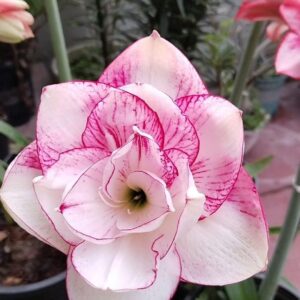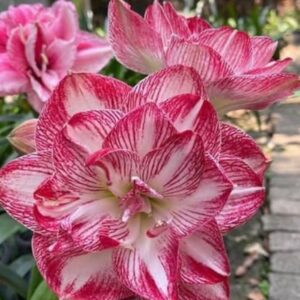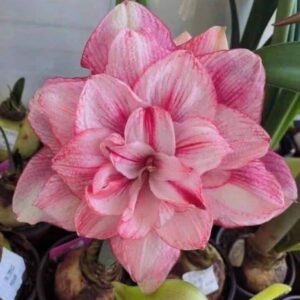

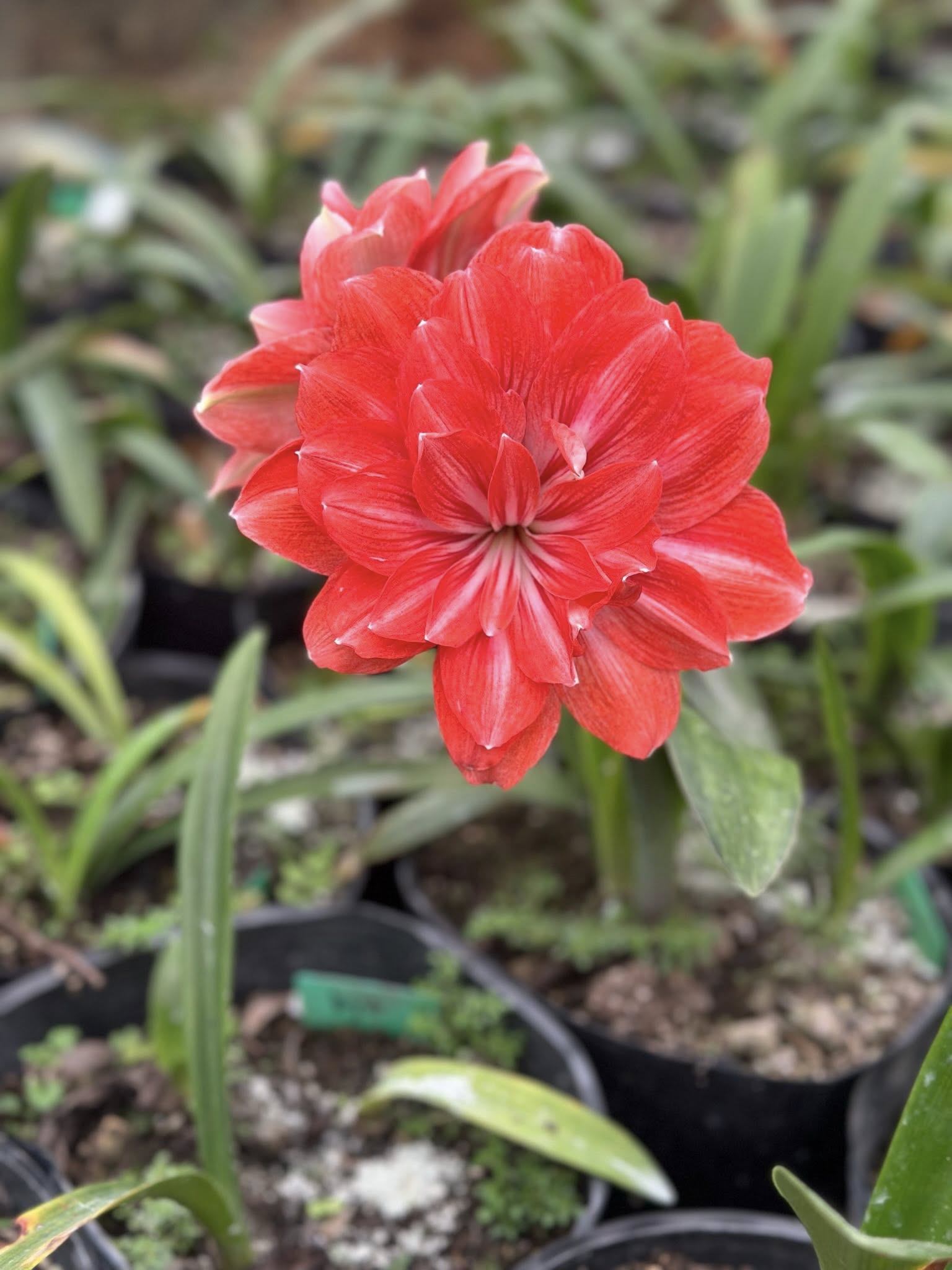
Hippeastrum ‘Carina‘ is a popular, vibrant cultivar of the amaryllis family, highly favored for indoor cultivation due to its striking, deep red flowers. It is often sold as a holiday plant, blooming during the winter months to add intense color to indoor spaces.
Here is a detailed guide to Hippeastrum ‘Carina’ (Amaryllis ‘Carina’):
1. Appearance and Features
- Flowers: Produces large, trumpet-shaped, vibrant red to magenta-red blossoms. Each stem often produces 3–6 blooms.
- Stems: Thick, green, hollow, and leafless, typically reaching a height of 0.1 to 0.5 meters (up to 1.5 feet).
- Foliage: Long, strap-like green leaves usually appear after or during the blooming phase.
- Growth Rate: Fast-growing.
2. Care and Cultivation
- Light: Prefers bright, direct light. Place it within 1 foot of a sunny, south-facing window to maximize growth.
- Watering: Water sparingly until the plant is in active growth (when the stem appears). Once growing, water regularly when the top few centimeters of soil are dry.
- Soil: Requires well-draining, peat-free, loam-based potting compost.
- Fertilization: Feed fortnightly with a balanced liquid fertilizer when in active growth.
- Temperature: Thrives in warm, indoor temperatures (60-75°F / 16-24°C).
3. After-Flowering Care & Reblooming
- Post-Bloom: Cut back the flower stem to 1–2 inches above the bulb after it fades, but keep the foliage intact to allow the bulb to store energy.
- Dormancy: In late summer/early fall, reduce watering and allow the leaves to turn yellow. Store the bulb in a cool (40–50°F), dry, dark place for 8–12 weeks to initiate a new cycle.
4. Important Considerations
- Toxicity: Like all Hippeastrum species, Carina is toxic if consumed and can cause vomiting and diarrhea in pets and humans.
- Pests: May be susceptible to bulb scale mites, narcissus bulb flies, and spider mites.
- Hardiness: Generally grown as a houseplant in cooler regions, but can be grown outdoors in USDA Zones 8a-10b.
Amaryllis ‘Carina’ is often used to brighten up homes during the holidays, providing a reliable and dramatic display with proper care.