
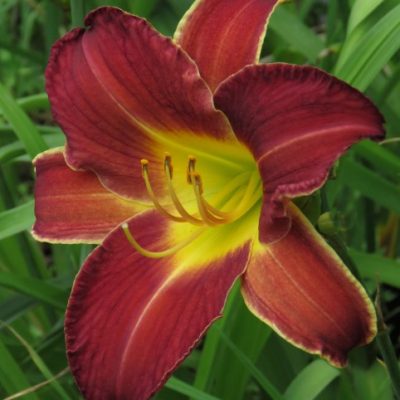
The “Touchwood” daylily (Hemerocallis) is a striking mid-to-late season perennial known for its deep, velvet brick-red blooms contrasted by a bright chartreuse throat. Reaching up to 97 cm in height with large 15 cm flowers, it is celebrated for its vigorous growth, high bud count, and resilience. [1, 2, 3, 4]
Key Characteristics & Cultivation
- Blooms: Showy, trumpet-shaped flowers that open in the morning and last for a single day. Successive buds on the same stalk ensure continuous flowering. [1, 2]
- Sunlight: Requires at least 6 hours of direct sunlight daily for the best color and flower production. [1, 2]
- Soil & Water: Highly adaptable to various soil types (including clay) but thrives in fertile, moist, and well-draining soil. It also demonstrates notable drought tolerance once established. [1, 2, 3]
- Maintenance: Low-maintenance and pest-free. Deadhead spent blooms and trim the entire stalk down to the base when all flowers on it are finished to encourage continuous flowering. [1, 2, 3, 4]
Important Garden Tips
- Dividing: Divide established clumps every 3 to 4 years using a spade or garden saw to maintain the plant’s vigor and promote prolific blooming. [1, 2]
- Planting Time: The best times to plant or divide daylilies are in the early spring or early fall. [1]
- Toxicity: While daylily shoots, tubers, and buds are commonly used as Edible Daylilies in Asian cuisines, all parts of the daylily are highly toxic and fatal to cats. [1, 2]