
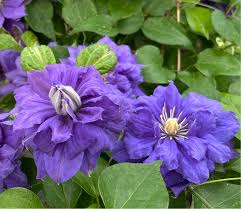
The “Kanava” or “Ranjai” clematis (specifically Clematis heynei, also known as Deccan Clematis or Clematis gouriana) is a beautiful, aromatic, white-flowered climbing shrub native to India, particularly the Deccan region of Maharashtra and Karnataka. It is a popular, fast-growing vine in India, frequently grown on trellises, fences, and around homes for its fragrance and delicate, star-shaped flowers.
Here is an overview of the Kanava/Ranjai clematis:
Characteristics
- Appearance: A vigorous, woody, climbing vine (liana) that can grow 1-3 meters long.
- Flowers: Fragrant, white, 2-4 cm wide flowers that occur in clusters (panicles) in leaf axils. They have 4-6 white, narrow sepals that look like petals, with a central cluster of yellow stamens.
- Leaves: Simple or trifoliate (three-lobed) leaves with serrated margins, often velvety to the touch.
- Flowering Time: It blooms in cycles throughout the year in India, with heavy flowering, often between September and February.
- Fruit: Following the flowers, it produces seeds with long, feathery tails that form silver, fluffy, spherical shapes.
Cultivation and Care
- Habitat: It grows well in pots and gardens, thriving in full sun or partial shade.
- Support: It is a climber that needs support to grow, such as a pergola, trellis, or nearby shrubbery.
- Watering: Requires regular watering; it thrives in moist but well-drained soil.
- Pruning: As it blooms on new growth, it can be pruned lightly to maintain shape after a heavy flowering cycle.
Cultural and Medicinal Significance
- Medicinal Uses: In Ayurveda and local tradition, the plant is used for treating various ailments. A paste of the roots is used as a poultice for swellings and inflammation. The leaves and stems are used in treating skin conditions, such as itches, psoriasis, and wounds.
- Common Names: Known as Ranjai (मराठी: रंजई) in Maharashtra, it is often grown for its aesthetic and aromatic appeal.
Difference from Other Clematis
While many clematis varieties are known in the West, the Clematis heynei is a specifically adapted Indian species that is highly aromatic, unlike some larger, non-scented hybrids, and is often mistaken for Clematis gouriana.