
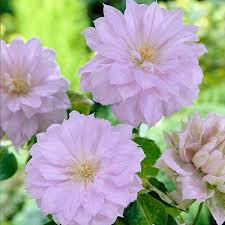
Clematis ‘Belle of Woking’ is a classic, highly admired deciduous climbing vine introduced in 1875. It is celebrated for its large, fully double or semi-double rosette-shaped flowers that bloom in shades of silvery-mauve to pale lavender, which often fade to a silvery grey as they age.
Here is a detailed overview of the ‘Belle of Woking’ Clematis:
Key Characteristics
- Flowers: Large, 4-6 inches (10-15 cm) across, pale lilac-blue or mauve with pointed petals, often described as having a rosette look.
- Blooming Season: Blooms in late spring to early summer, with a potential second, sometimes single-flowered, flush in late summer to early autumn.
- Height: Typically grows about 6–10 ft (2–3 m) tall.
- Hardiness: Hardy in USDA Zones 4–8.
Growing Conditions
- Light: Thrives in full sun to partial shade. As with most clematis, it prefers “head in the sun, feet in the shade,” meaning it appreciates having its roots kept cool and shaded by other plants or mulch.
- Soil: Prefers moist, fertile, well-drained soil.
- Support: Requires a sturdy structure like a trellis, arbor, fence, or wall to climb.
Pruning and Care
- Pruning Group 2: Because it blooms on both old wood (spring) and new wood (late summer), it belongs to Pruning Group 2.
- Light Pruning: In early spring, remove dead or weak stems, then prune back the remaining branches to a pair of large buds to promote flowers.
- Maintenance: Light pruning after the first flush of flowers can encourage a second, smaller bloom in late summer.
- Feeding: As “greedy feeders,” they benefit from regular, slow-release fertilizer in early spring.
- Toxicity: Like all clematis, the plant is toxic to pets (dogs, cats, horses) and can cause skin irritation, so it is recommended to wear gloves when handling.
Landscape Use
Due to its elegant, double, pale-colored flowers, ‘Belle of Woking’ is excellent for:
- Adding vertical interest to small gardens.
- Growing in containers.
- Combining with climbing roses (such as pink or white varieties) for a romantic look.
- Brightening up partially shaded areas or covering walls.