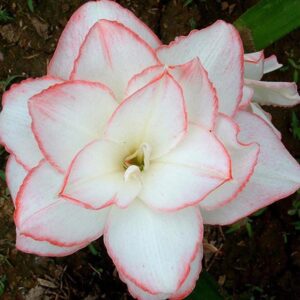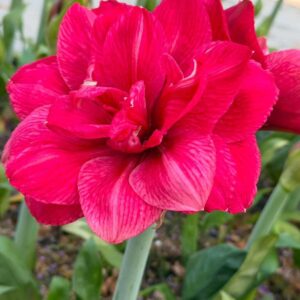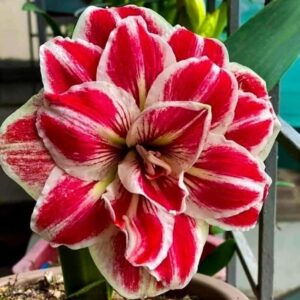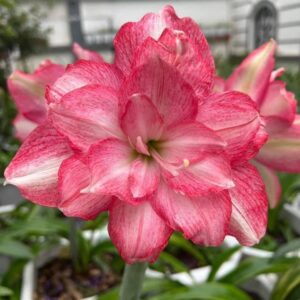

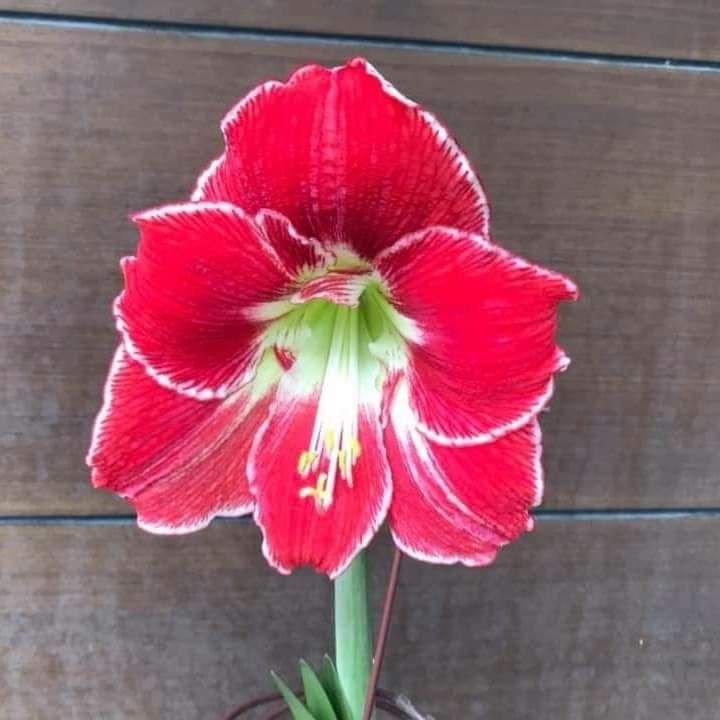
The ‘Silver Queen’ Amaryllis (often sold as a Hippeastrum hybrid) is a stunning, single-flowering bulb plant known for its large, elegant, and often bi-colored blooms. It is a popular, easy-to-grow choice for bringing bright, tropical color to indoor spaces during winter.
Here is a detailed guide on the Silver Queen Amaryllis:
Appearance and Characteristics
- Bloom Details: The flowers are typically single-flowered, large, and trumpet-shaped.
- Color: While sometimes listed as red in specific catalogs, the cultivar “Silver Queen” or its similar counterpart “Silver Cream” is known for a striking, lighter color, sometimes showing a pinkish or pale sheen on its petals.
- Size: It usually grows to a height of 45-50 cm (about 18-20 inches).
- Foliage: It produces strap-shaped, glossy green leaves, which often emerge along with the flower stems.
- Bloom Time: It typically flowers within 7–10 weeks after planting, often in early spring or winter.
Growing and Care Instructions
Amaryllis bulbs are easy to cultivate in pots.
- Planting: Choose a pot that is only slightly larger (about 4 cm wider) than the bulb itself, ensuring it has drainage holes. Use a well-draining, rich potting soil.
- Positioning: Place the bulb in the center of the pot with the top one-third of the bulb remaining above the soil surface.
- Light: Place the pot in a warm location with bright, indirect sunlight.
- Watering: Water sparingly after planting, increasing water only once the bulb starts to sprout. Keep the soil moist but not waterlogged to prevent rot.
- Post-Bloom Care: Once the flowers fade, cut the stem off at the base but keep the leaves, as they produce energy for the next year’s bloom.
Key Facts
- Toxicity: Like all Hippeastrum species, the Silver Queen bulb is toxic to pets, including cats and dogs, and can cause discomfort if ingested by humans.
- Hardiness Zone: Generally suitable for USDA zones 7-8.
- Usage: Ideal for indoor pots, containers, and sometimes used as a long-lasting, striking cut flower.
- Re-blooming: With proper care, these bulbs can be saved and forced to bloom again, potentially lasting for several years.