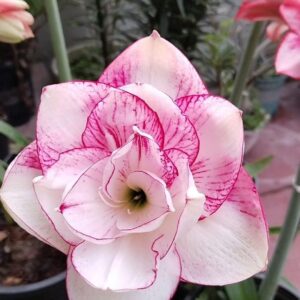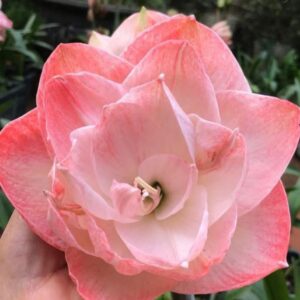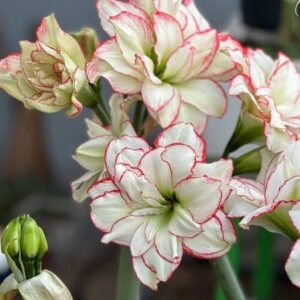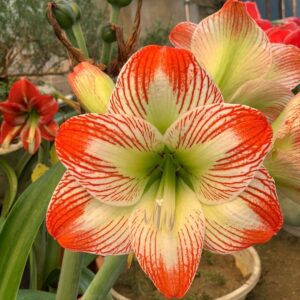

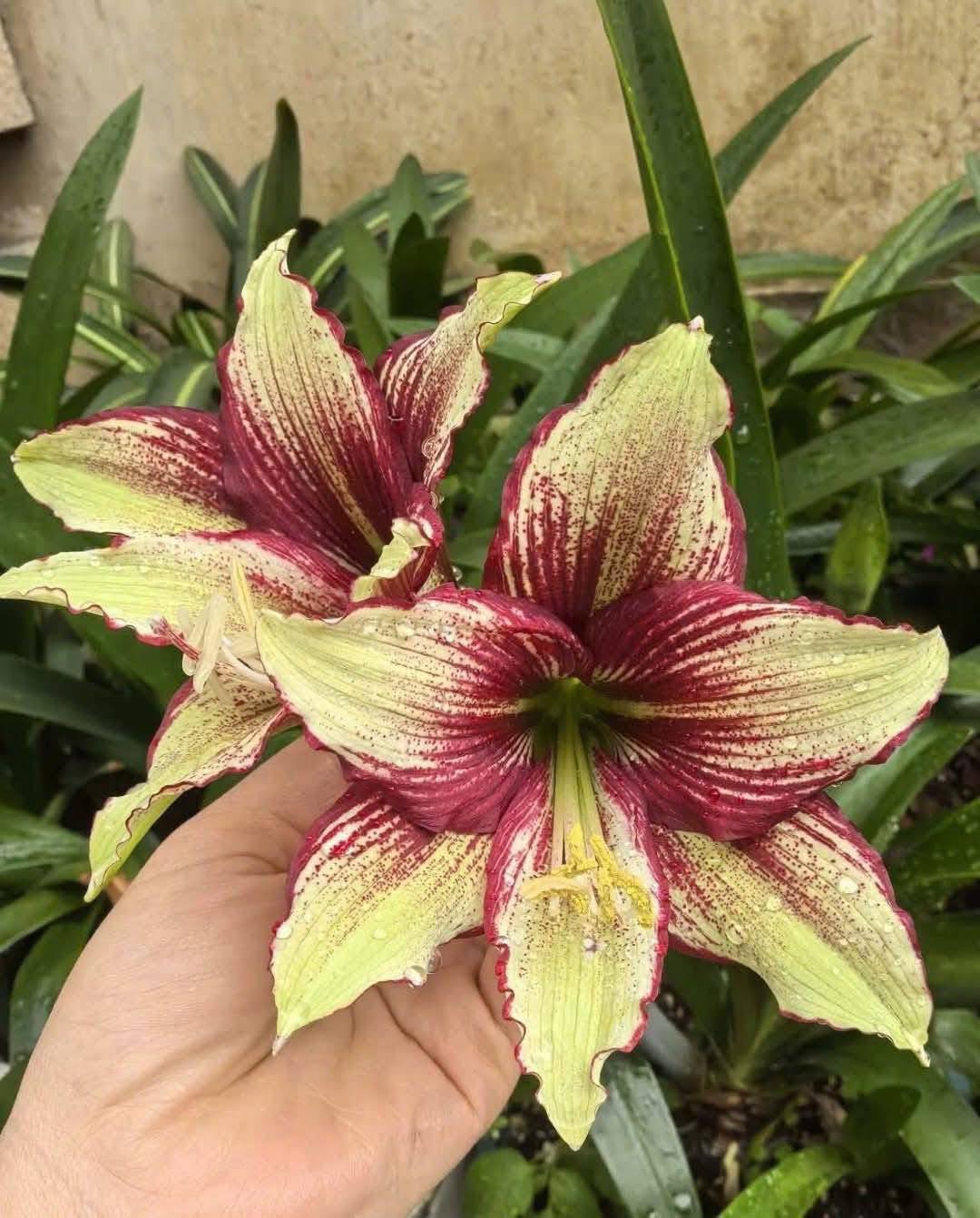
Amaryllis (specifically the popular red varieties often termed “Chilli” or Red Lion) are striking flowering bulbous plants renowned for their massive, trumpet-shaped blooms. While the true Amaryllis genus originates from South Africa, the plants commonly sold in stores for indoor, winter-holiday decoration are actually Hippeastrum hybrids, which are native to the tropical and subtropical regions of South America.
Here is a comprehensive guide to understanding and caring for Red Amaryllis (Hippeastrum):
1. Characteristics & Appearance
- Flowers: Large, trumpet-shaped flowers, often measuring 4–10 inches in diameter. They come in deep red, crimson, and sometimes bicolor or striped patterns.
- Structure: Each large bulb produces one or more thick, hollow,leafless stalks (scapes) that can grow 1–2 feet tall.
- Blooms: A single stalk typically bears 2–6 flowers that bloom consecutively.
- Lifespan: With proper care, these bulbs can live for up to 75 years.
2. Growing Conditions (Indoor)
- Light: They require bright, indirect light to thrive, particularly near a sunny window.
- Soil: Use a well-draining, high-quality potting mix. A mix containing perlite or sand helps prevent waterlogged conditions.
- Planting: Plant the bulb in a pot slightly larger than its diameter, keeping the top one-third to one-half of the bulb above the soil line.
- Temperature: Amaryllis prefers temperatures between 60–75°F (15–24°C).
- Watering: Water sparingly initially. As the plant grows and blooms, increase watering, but allow the top few centimeters of soil to dry out between waterings to prevent rot.
3. Care After Blooming (Reflowering)
Amaryllis are perennials, meaning they can rebloom year after year if properly managed.
- Deadheading: Remove spent flowers to encourage further blooming.
- Cut the Scape: Once the entire flower stalk turns yellow or brown, cut it off about 1–2 inches above the top of the bulb.
- Foliage Care: Keep the leaves! The leaves will grow long and strap-like after blooming. Place the plant in a sunny spot and continue watering/fertilizing (using a balanced liquid fertilizer) in spring and summer to allow the bulb to gather energy.
- Dormancy Period: To force reblooming for the next winter, induce dormancy in early autumn (Sept-Nov) by stopping watering and moving the plant to a cool (50–55°F), dark, dry spot for 8–12 weeks.
4. Common Issues
- Red Blotch (Fungus): Caused by Stagonospora curtissi, this presents as red spots or streaks on leaves and stems. It is caused by overwatering or infected bulbs.
- No Flowers: Usually occurs if the bulb did not receive a proper dormant period or if it didn’t get enough energy storage (leaves) during the summer.
- Drooping Stalks: The tall, hollow stalks may need support from a stake.
5. Symbolism & Toxicity
- Meaning: Amaryllis symbolizes pride, strength, and radiant beauty, partly because they bloom during the winter holidays.
- Toxicity: All parts of the plant, especially the bulb, are toxic to pets (cats/dogs) and humans if ingested.
6. Waxed Amaryllis
Waxed, ready-to-bloom amaryllis bulbs have become popular as easy, “no-care” gifts. These bulbs contain enough water and nutrients to bloom without being planted in soil, but they typically cannot be reused for a second year.