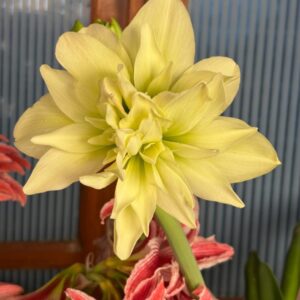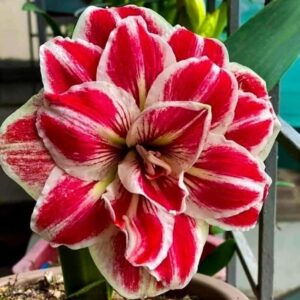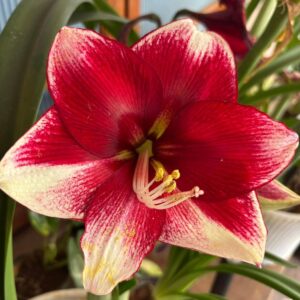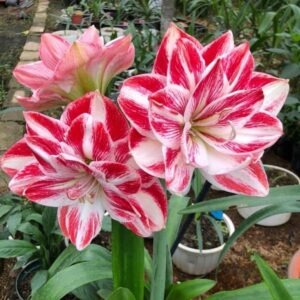

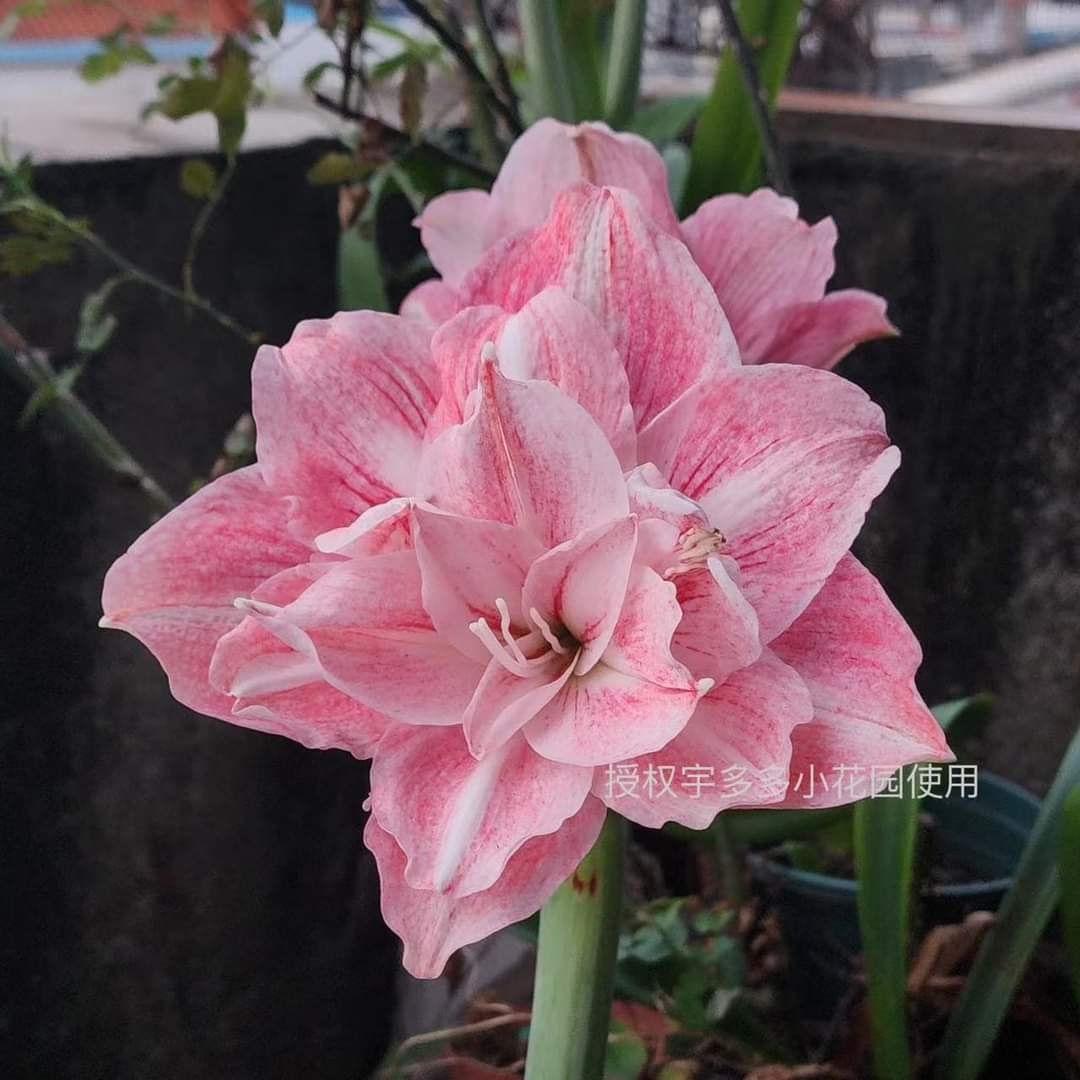
Beauty Princess Amaryllis (often referring to the popular Hippeastrum hybrid) is a stunning, easy-to-grow bulbous plant known for producing massive, trumpet-shaped flowers, often during the winter holiday season. While technically Amaryllis is a small genus from South Africa (A. belladonna), the commercial “Beauty” or “Princess” types found in stores are usually Hippeastrum hybrids from South America, prized for their vibrant, velvety petals.
Here is a detailed overview of the Beauty Princess Amaryllis:
Characteristics & Appearance
- Blooms: Large, funnel-shaped flowers (approx. 15–20 cm in diameter) often featuring pink, soft-pink, or white petals with delicate, darker veining.
- Structure: Produces 1–2 thick, leafless, hollow stalks (scapes) per bulb, bearing 4–6 flowers each.
- Foliage: Long, strap-like green leaves usually emerge during or after flowering.
- Fragrance: While many hybrids are scentless, some varieties may have a light scent.
- Height: Generally grows 45–60 cm tall.
Care Instructions
Amaryllis are remarkably low-maintenance and are popular for indoor, year-round, or winter decoration.
- Light: Thrives in bright, indirect sunlight.
- Watering: Water sparingly after potting, increasing only when the shoot appears. Keep the soil slightly moist, but never soggy to prevent bulb rot.
- Temperature: Prefers temperatures between 18°C and 24°C.
- Soil: Use a well-draining, loose, and airy potting mix.
- Potting: Plant with the top one-third to one-half of the bulb exposed above the soil line.
- Aftercare: When flowers fade, cut the stalk, but allow the leaves to grow. Feed regularly to store energy for the next blooming cycle.
Meaning & Symbolism
- Origins: The name comes from the Greek word amarysso, meaning “to sparkle” or “to shine”.
- Symbolism: Represents pride, strength, determination, and radiant beauty.
- Mythology: Associated with the Greek myth of a nymph, Amaryllis, who pierced her heart to win the love of a shepherd named Alteo, resulting in a red flower blooming from her blood.
Important Notes
- Toxicity: The Amaryllis plant is poisonous if ingested by humans, dogs, or cats.
- Longevity: With proper care, bulbs can bloom again and again, sometimes lasting for up to 75 years.