
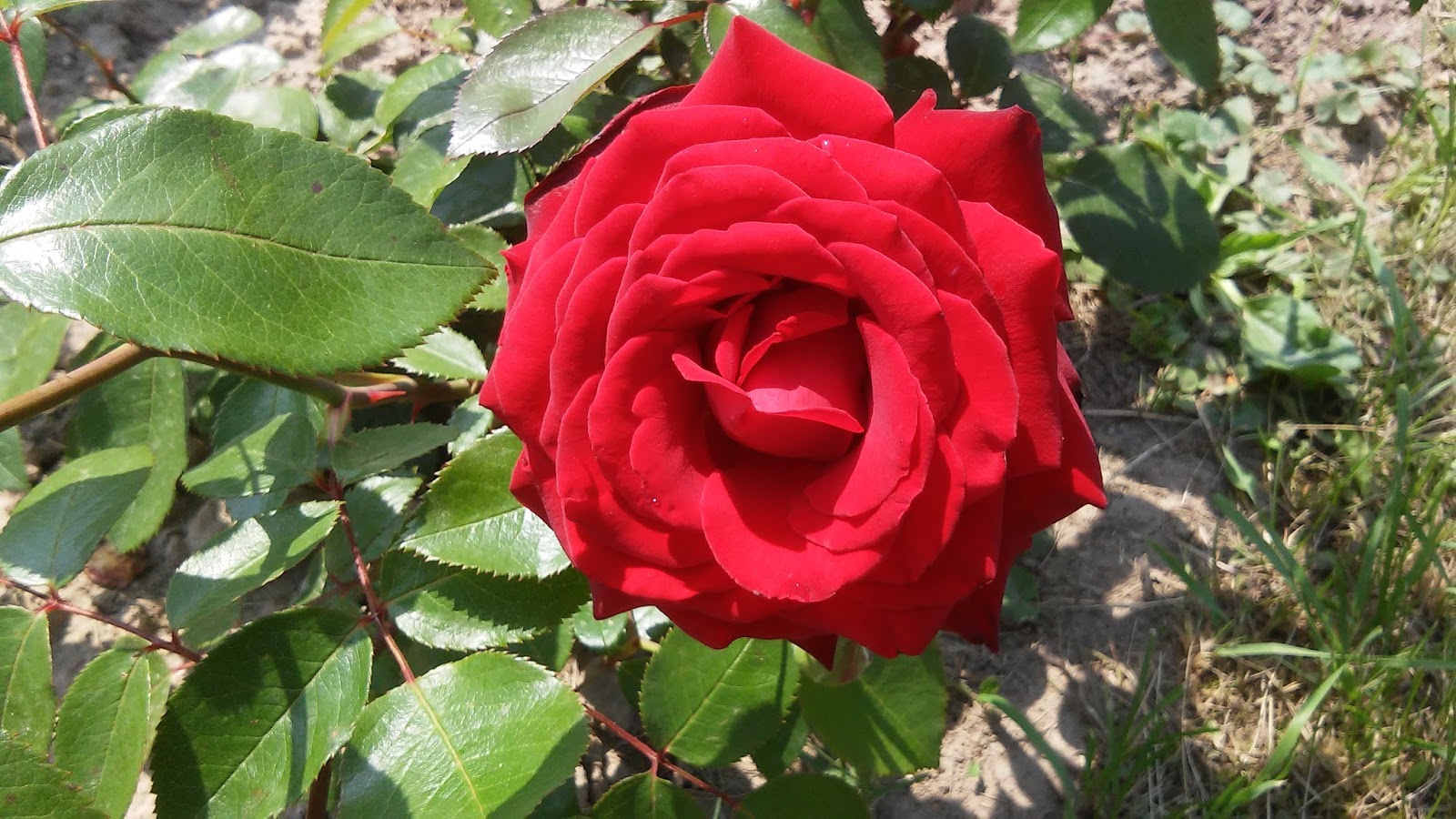
The ‘Mister Lincoln’ rose is a world-renowned Hybrid Tea rose, widely considered the quintessential red rose for its deep colour and powerful scent.
Key Characteristics
- Appearance: Features large, high-centered, velvety deep-red blooms that can reach up to 6 inches in diameter. The foliage is dark, leathery green, often emerging with a reddish tint.
- Fragrance: Famous for its exceptionally strong, sweet damask fragrance that can often be smelled from several feet away.
- Growth Habit: A vigorous, tall, and upright shrub that typically grows between 4 to 7 feet (121–213 cm) in height.
- Blooming: It is a repeat bloomer, producing flowers in flushes from late spring through fall.
History & Recognition
- Origin: Bred in 1964 by Herbert Swim and Weeks Rose Growers in the United States.
- Naming: Named in honor of Abraham Lincoln, the 16th President of the USA.
- Awards: It won the prestigious All-America Rose Selections (AARS) award in 1965 and is a member of the Rose Hall of Fame.
Care & Cultivation
- Light & Soil: Thrives in full sun (6+ hours daily) and prefers rich, well-draining, moist soil.
- Hardiness: Performs well in USDA zones 5–10. It is notable for its heat tolerance, making it popular in warmer climates like California and Australia.
- Maintenance: While generally healthy, it is susceptible to blackspot and powdery mildew, especially in humid regions, so preventive care is recommended.
- Pruning: Best pruned in late winter or early spring to encourage new growth and maintain its upright shape.
Popular Uses
- Cut Flowers: Its long, sturdy stems and lasting fragrance make it a favorite for bouquets and indoor vases.
- Garden Placement: Due to its height, it is best suited for the back of borders or as a standalone specimen plant.