
Masquerade Rose
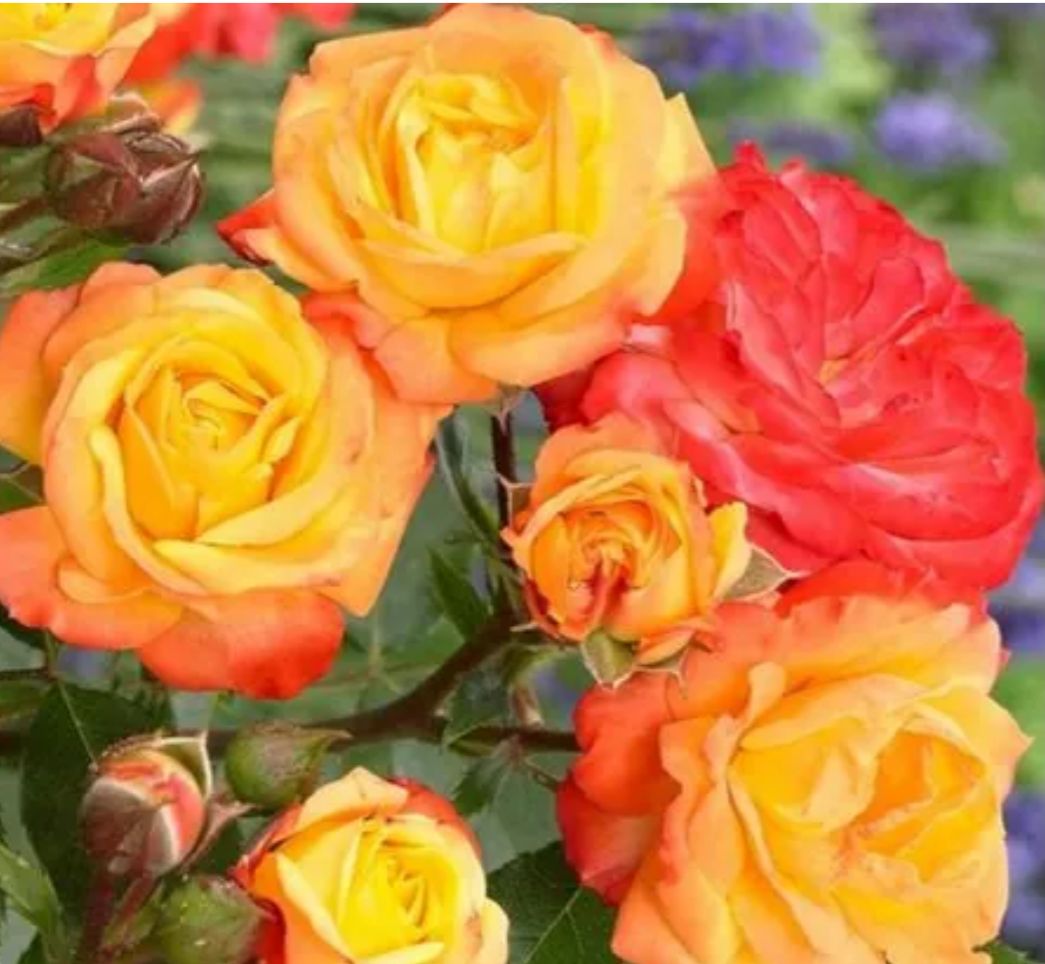
The Masquerade Rose is the personification of whimsy and transformation. Unlike traditional roses that hold a single hue, Masquerade is celebrated for its theatrical “performance.” As the blooms age, they undergo a stunning metamorphosis, ensuring that a single bush or bouquet always displays a kaleidoscope of different colors simultaneously.
Signature Features & Aesthetics
- The Transformation: Each cluster begins as bright, sunny yellow buds. As the petals catch the light and age, they blush into a delicate salmon-pink before maturing into a deep, rich raspberry red.
- Abundant Floribunda Form: This rose produces large, semi-double clusters of blooms rather than single stems, creating a dense, “blousy” look that fills space with vibrant energy.
- Glossy Foliage: The multi-colored blooms are set against a backdrop of dark, leathery green leaves that provide a high-contrast, professional finish to any arrangement.
- Dynamic Versatility: Because it contains yellow, pink, and red tones all at once, the Masquerade Rose is a “bridge” flower that can harmonize almost any color palette in a floral design.
Why Choose Masquerade Roses?
- The “Conversation Starter”: Floral designers and gardeners love Masquerade because it never looks the same two days in a row, making it a favorite for those who love “living art.”
- High Yield: As a Floribunda, it provides a high bloom count per stem, offering incredible value for creating full, lush centerpieces.
- Proven Resilience: Known for being a hardy and disease-resistant variety, it is as dependable as it is beautiful, maintaining its vibrant colors even in the height of summer.
Technical Specifications
| Feature | Details |
| Breeder | Boerner (United States) |
| Color | Color-Changing (Yellow to Pink to Red) |
| Flower Form | Semi-Double / Cluster-Flowered |
| Petal Count | 15 – 25 Petals |
| Fragrance | Light, Sweet Fruity Scent |
| Vase Life | 7 to 10 Days |
| Bloom Size | Medium (approx. 6–8 cm) |
Professional Care Instructions
To ensure your Masquerade Roses perform their full color transition:
- Hydration is Key: Upon arrival, trim 1 inch from the stems at a 45-degree angle to open the water-conducting vessels.
- Light Exposure: To see the most dramatic color shift, allow the roses to sit in a brightly lit room (though avoid scorching direct sunlight), as light triggers the “blushing” of the petals.
- Clean Environment: Place in a sterilized vase with fresh, room-temperature water. Change the water every 48 hours to prevent bacteria buildup.
- Pruning for Clusters: Since these grow in clusters, you may occasionally want to snip a single spent bloom from the group to keep the remaining flowers looking fresh.
- Cool Environment: To prolong the “yellow” phase, keep them in a cooler spot; to speed up the transition to “red,” move them to a slightly warmer room.